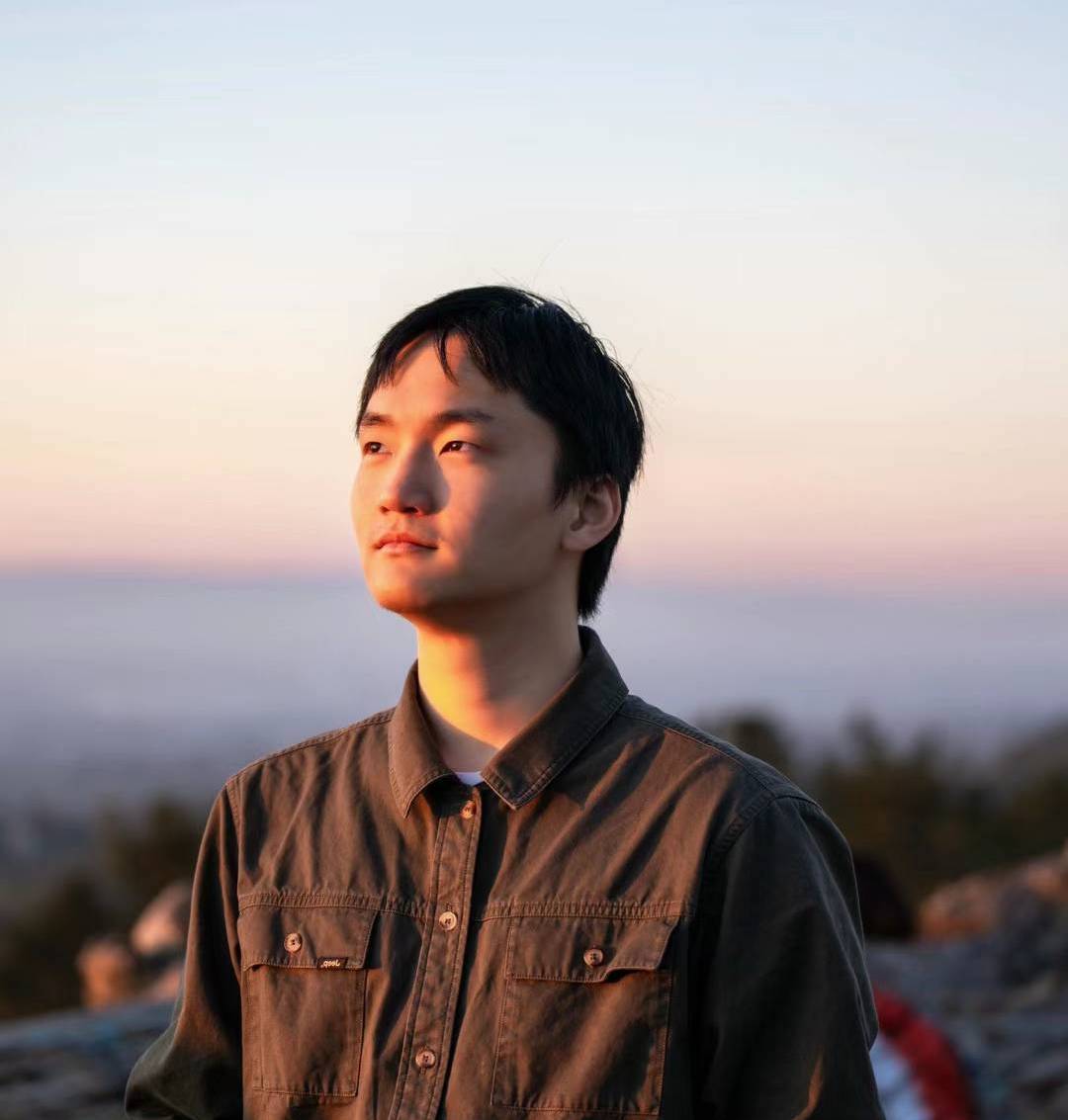
About me
I am a researcher at OpenAI. I received my Ph.D. in Computer Science from UC Berkeley, where I was fortunate to be advised by Jelani Nelson and Avishay Tal. Before that, I was an undergraduate in the Yao Class at Tsinghua University, and a competitive programmer in high school.
Written in October 2026.
OpenAI recently shared ten advances in mathematics, followed by 721 math papers and three landmark results. Problems I could hardly imagine solving during my PhD—RL vs. L, matrix multiplication, and the exponential time hypothesis—have now been solved. The RL = L result is among those 721 papers. One thing is becoming increasingly clear:
Superhuman intelligence for understanding the world is here. The question now is how to change the world.
Written in July 2026.
Less than a year after I wrote the reflection below, LLMs are already changing how theoretical research is done. In our podcast, we discuss the refutation of the Erdős unit distance conjecture. A new era of theoretical research is here.
Written in August 2025.
Looking toward LLMs
My interests have recently shifted toward LLM reasoning and self-improvement. This summer, I am interning at Microsoft Research with Janardhan Kulkarni as my mentor.
Trained on noisy human data, LLMs can already solve competition-level problems in mathematics and algorithms. With better training methods, more compute and data, and advances in engineering, architectures, and algorithms, I expect them to solve not only the specific problems from my PhD research, but also major open problems that I have no idea how to approach:
- Is P separable from L? (Can every time-efficient algorithm also be made very memory-efficient?)
- Is RL equal to L? (Is randomness useless for very memory-efficient algorithms?)
LLMs are going to fundamentally change how theorists work.
My PhD research
I spent the first few years of my PhD trying to understand the role of memory in computation through the lens of theoretical computer science. This led me to questions such as:
- How many memory accesses are needed to determine whether $n$ numbers are distinct?
- How can you approximate the median when you can only look at each data point once?
- Can you solve a set of equations when you can only look at each equation once? Twice? $O(1)$ times?
I find it remarkable how such concrete, seemingly simple questions can lead to deep lines of research and beautiful ideas.
Acknowledgments
Doing theory has been a joy. In addition to my amazing PhD advisors, I have been fortunate to work with many kind and inspiring professors, to whom I remain deeply grateful:
- Prof. Ryan Williams
- Prof. Zhihao Gavin Tang
- Prof. Hu Fu
- Prof. Mikkel Thorup
- Prof. Ran Duan